Tuesday, July 15, 2008

1956 Topps Baseball #5, Ted Williams

Any talk of classic vintage cards includes 1956 Topps and its 340 high-quality cards replete with star power (Jackie, Mantle, Aaron, Mays, Clemente, Ted Williams, etc.). Most cards feature in-game action shots and eye-popping colors as on this #5.


This Ted belongs in any quality collection, not just a type set of #5s. My only nit to pick is the photo, where Ted's looking way up in the air. Is that just a lazy fly to right off the bat of the greatest hitter who ever lived? Harumph.

It's tough for sets of any era to match 1956's design and I love how it looks in 8-count pages.
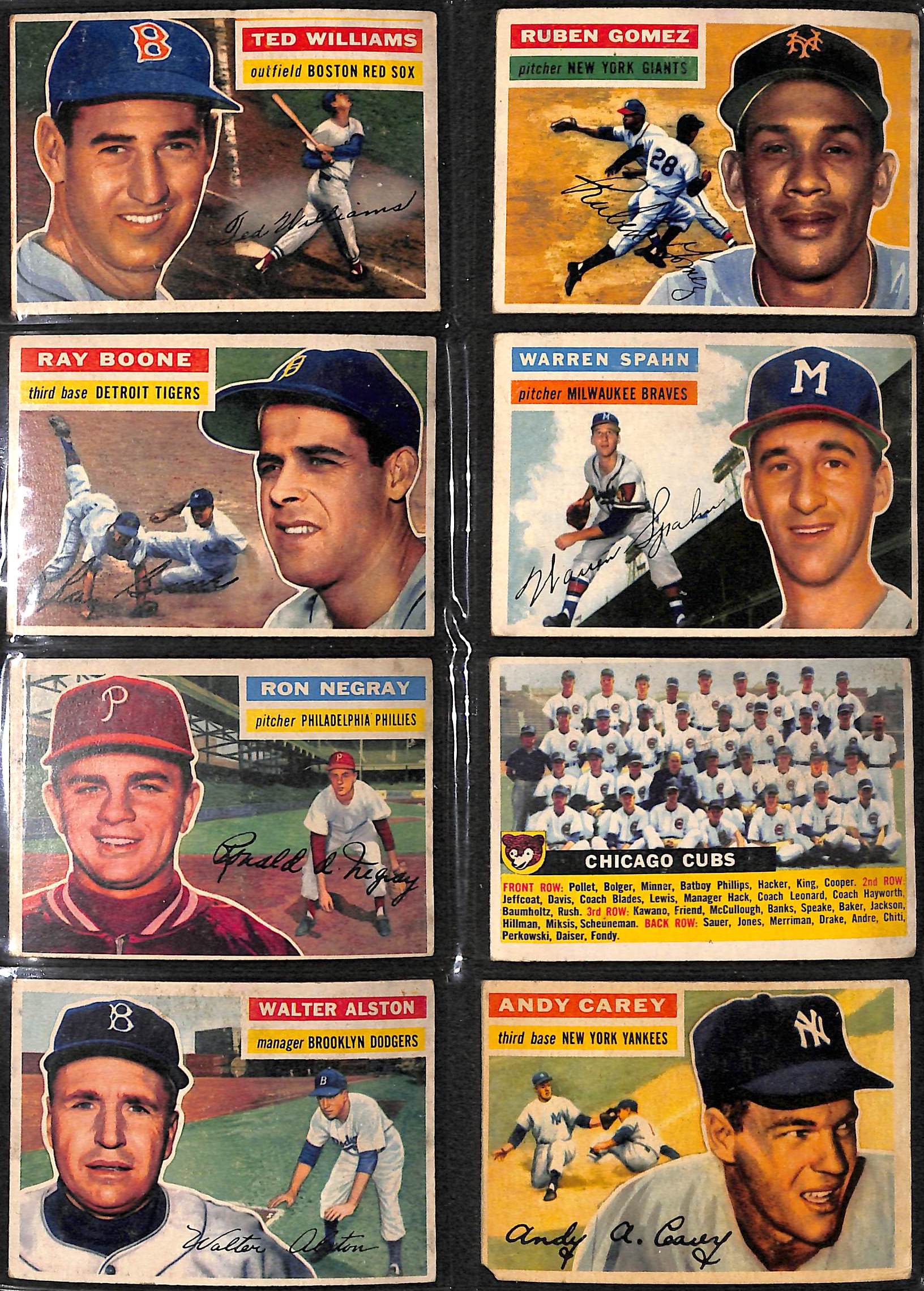

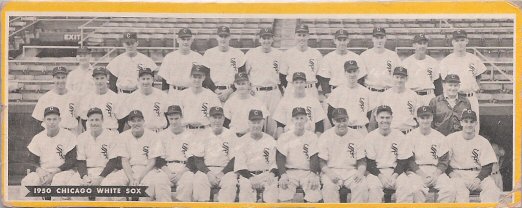
Topps designed their 1956 set with serious competition in mind, given their pitched 1952-55 rivalry with Bowman. Details like the portrait halo, on-card autograph, and varied nameplate colors no doubt took extra time to assemble and still look great today. They also integrated team cards into its checklist for the first time, after test-marketing standalone team photos in 1951 (gallery at PSA).

1956 proved a swan song for serious competition when Bowman waved a white flag early that year before releasing a set, shuttering baseball production and selling all player contracts to Topps. I argue that card-as-art ended with this set, seeing how Topps themselves moved to color photos in 1957 and back cartoons shrunk in favor of larger player stat blocks.


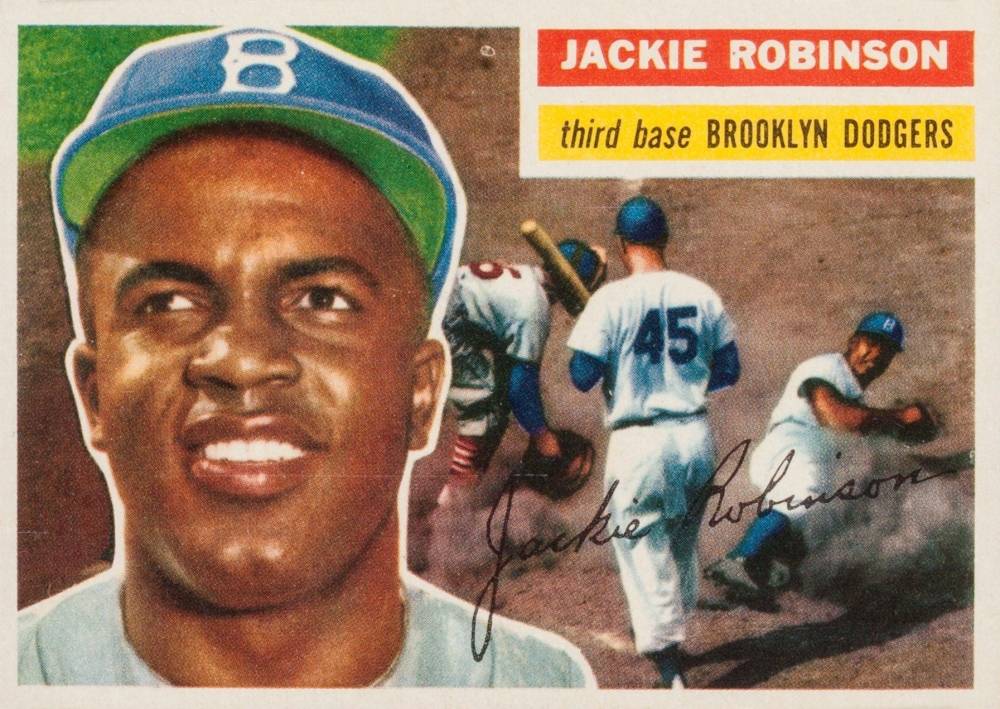
While Ted's great, my first 1956 card was #30 Jackie Robinson, spotted atop a stock of vintage consignments in a Seattle shop back in 1998. It transported me. My collection contained no Jackie cards at the time--but here was one from when he played, with a great portrait, and an action shot of sliding into home! Who can resist that combo?


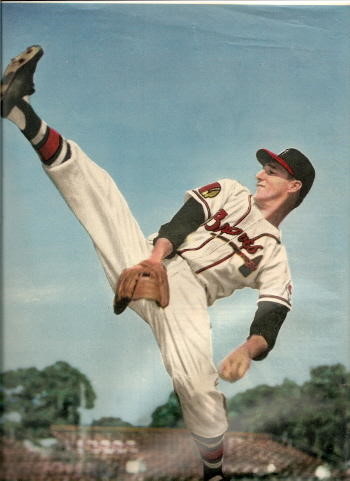
The original photo is a fair match for how Topps used it on the card.


That's Jackie stealing home against the Cardinals on August 29, 1955. Johnny Podres (45) watches catcher Bill Sarni try to handle the ball with HOF umpire Jocko Conlon behind the plate. I wonder if modern baseball fields would kick up that much dust? A great moment either way.

Value: Even low-grade Williams cards can cost $100+ these days and often much more.

Fakes / reprints: The 1956 Topps design is so classic, it's been reprinted and repurposed repeatedly. Ted also gets faked from time-to-time, so I recommend buying a common as your 1956 type card. If you decide to get an ungraded #5, familiarize yourself with the feel and look of authentic cards from the set first, so you feel confident in a purchase.

Monday, July 14, 2008

1979 Jack Wallin Diamond Greats Baseball #5, Joe Sewell

There are 1000 stories in the naked city and today's guest, Joe "Yankees Shortstop" Sewell, ties together several.
  • Tragedy: debuted as Ray Chapman's replacement after baseball's first fatal beaning in 1920.
  • Joy: Cleveland rode out of that valley to win the World Series that year, and Joe eventually picked up another with the Yankees in 1932.
  • Legacy: forty-plus years later, the Vets Committee voted him into the Hall of Fame, likely because he was one of the best shortstops throughout the 1920s and was day-in, day-out dependable before Gehrig made it fashionable.
Card front (blank back)

Though his batting skills eventually tailed off, Sewell holds what might be an unbreakable career record, striking out only once every 63 at-bats. This skill improved over time and he never struck out more than 9 times per season from 1925-1933, despite playing almost every single day. His 1990 obituary reported that Joe played his entire career with a single bat, adding a touch of the mythical to an already impressive performance.

Jack Wallin, an enthusiastic memorabilia collector, published this set of "Diamond Greats" using simple stat lines and archival photos. Unlike many other retro oddball sets, all of the players were still alive when Wallin signed them to contracts. Most of the cards went directly to collectors, so condition is usually excellent and a high percentage bear autographs. You could argue being alive was the main criteria for set inclusion, as some of the players pictured weren't anything close to great. (Even Sewell's a marginal HOFer, if less so than others.)

Barely 30 years old, the set's a nice way to pick up vintage players at cheaper prices, especially compared to anything from their own playing days. The cards turn up often enough in oddball bins at shows and a basic eBay search returned 500+ lots available for clicky puchasing. The photos vary considerably in composition, with many using a simple head-and-shoulders shot. Collectors looking for "more" will do best with pitchers and catchers, who frequently get full-length action shots.

Trivia note: Rube Marquard is in this set, but died soon after, in 1980. He holds the distinction of being the last living player from the T206 tobacco set. As far as I can tell, Diamond Greats was the last to feature him while alive, taking his card history from 1908 - 1979, an impressive 69 years on vintage cardboard.

Sunday, July 13, 2008

Photo research puzzler

As a quick break from the parade of #5s, check out this baseball photo found yesterday at a Cape Cod, MA antique store. It doesn't have any provenance, but does include clues as to time and place from the clothes and surroundings. Wonder how close we can ID a time and place based on those pieces? (Rich Lederer of Baseball Analysts ran similar Foto Friday contests a little while ago.) Click the photo for a full-detail scan.


The picture shows a backyard-style game. It looks like people are circling bases after a hit, with a catcher prepping to receive a throw. It's almost certainly home plate, as there are two bats on the ground nearby. Two women in skirts run the bases, one likely the hitter headed to the swingset (first base), and the other (in the darker skirt) running home from third. An inscription on the back reads "Blue River Baseball Team" in nice penmanship.


The closest nearby connections are the Bluefish River (Duxbury, MA, across the bay from the Cape) and the Blue Hills Reservation south of Boston. Perhaps it's a house at the base of the hills? The trees rise steeply beyond the house and baseball diamond, so could be from another area entirely. (Plenty of states include a "Blue River," so I'm starting with proximity to the point of purchase.)

There's a flagpole in the back, but no wind means a slack flag, and no chance to date the photo by number of states. I did a high-resolution scan that picks up pretty much everything on the original. Any other ideas for locale and time? I'm interested in the idea of girls and boys playing together (or against each other), since women don't show up much in early baseball history.

Friday, July 11, 2008

1920-1921 W514 Baseball #5, "Shufflin' Phil" Douglas

Shufflin' Phil Douglas owns a great baseball nickname, right up there with Puddin' Head Jones and Hot Potato Hamlin. Unfortunately, the imaginative title masks a greatly troubled player, as Phil's drinking towered over his prodigious pitching talents. We could remember him as a World Series winner and one of the last legal spit-ballers, but Douglas casts a larger shadow as a recipient of one of baseball commissioner Kennessee Landis' lifetime bans from baseball.

Card front (blank back)

Phil debuted with a cup of White Sox coffee in 1912, just the first stop on a journey that covered five franchises over ten years, as teams progressively passed along his off-the-field issues like a track baton. John McGraw's Giants traded for Douglas in 1919 and Phil stuck around long enough to win two games in the 1921 World Series, but away from the diamond, he clashed with the discipline-minded manager, garnering both team suspensions and a bizarre dry-out kidnapping.

Tempers and drinking being what they are, it wasn't long before Phil's desire to sabotage McGraw shot himself in the foot. Douglas penned a foolish letter to a friend on the second-place St. Louis team, offering to "disappear" for the rest of the season (and thus denying New York their best pitcher), if the Cardinals provided some inducement. Despite a sober retraction, Commissioner Landis granted Phil's wish by banning him for life on August 16, 1922.

I like the downcast, introspective expression on this card. New York's uniform hangs slack and a little empty, long wool sleeves itchy against its humid summer winds. Douglas plays his last and longest stop in the bigs. Victories on the field come often, but the manager is a pain-in-the-ass. Bottles offer both solace and demons. Phil wonders: can't a guy have and eat his cake once in a while?

Most sets from the teens and twenties have an ephemeral feeling, with cheap paper stock and simple drawings like today's W514s. Without company info or statistics, it's hard to narrow a set's print date to one year, so players that change cities frequently help pin down a year by their listed team. Some catalogs date this set as 1919, but Phil didn't join New York until late that year, making it too early unless they rushed out the set for the World Series.

I think this set printer started production in the winter of 1919 and debuted them close to opening day in April 1920, with stock continuing to fill carnival vending machines through 1921. The dotted line on my #5's left edge hints at a neighbor; most came in strips of 5, leaving it to young collectors to hand-cut them down to singles. See Robert Edwards Auction's 2005 lot of several uncut strips for more.

Value: This #5 cost $15, about right for low and mid-grade singles. As with other prewar sets, stars cost a good deal more.

Fakes / reprints: Not sure if anyone reprinted Shufflin' Phil, but they probably exist for HOFers.

Thursday, July 10, 2008

1974 Laughlin Baseball Sportslang #5, Mascot

Artist Robert G. Laughlin created a number of 1970s baseball sets, from all-time highlights (1974 Famous Feats #5 profile) to Negro League player portraits (1978 Long Ago Black Stars #5 profile). His most readily available, the World Series issues, came in partnership with Fleer, but many others went out under Bob's own name, advertised via his popular newsletter, "Inside Pitch." Laughlin's style, alternately cartoonish and evocative, works well with cards and Mascot is about the cutest thing you'll see on baseball cardboard.

Card front

Prior to their successful challenge to Topps' hegemony and their 1981 set, Fleer wandered somewhat in the baseball card forest. (They printed lots of stickers, lots of team logos, and lots stickers with team logos.) Laughlin's issues seem more like labors of love and 1974 Sportslang comes from this mold, giving history to a bunch of sport phrases.

Card back

People who jump into suit and cavort around the field are common to baseball, though not universal. The Yankees, for one, have no mascot and the Red Sox only added "Wally, the Green Monster" a few years ago. In the olde tymes, a "mascot" was more like today's bat boys, with some teams hosting a kid in the dugout for good luck or amusement. They'd wear a Gaedel-sized uniform, pose for team photos, and occasionally appear on a card. The Chicken (FamousChicken.com) modernized wearing furry suits and acting out against umpires, which continues to this day in both his act and dozens of imitators.

Value: Singles from this 40-card set cost a dollar or so, with no real stars to speak of.

Fakes / reprints: Doubt any reprints or fakes exist for this set, given its low profile and lack of real players.

Wednesday, July 9, 2008

1953 Red Man NL #5, Roy Campanella

My dad collected baseball cards as a young Yooper in Iron Mountain, Michigan. No doubt it passed the time between local "gang activity," where kids from the Italian families would hunt the Norwegians (including him) through the alleys one day and be hunted the next. Plenty of his childhood stories include the game one way or the other, growing up in a house that backed up to a ball field. We drove by there about 15 years ago and things seem little changed, even as the area's mining economy sputtered and eventually withered away during the 20th century.


Card front

A few of dad's cards survived into adulthood, usually because they were crammed into old books or other deposits of ephemera. During the 90s, I'd get an envelope every couple of years with a re-found card. What temptations they represented, a 1962 Musial one year and 1956 Duke Snider the next! Dad and grandma disagree about what happened to the bulk of his cards, with flood damage and swiping by childhood "friends" the top suspects. Whatever their fate, those discoveries seeded my own vintage collection, which now stretches back into grandpa's time and beyond.

Early in the re-discovery process, a 1953 Red Man Campy came in the mail. Its over-sized artistic beauty loomed over my mid-1980s Topps cards. They stacked neatly into 2 ½-x-3 ½ inch piles, but Big Roy got his own space at almost twice the size. He stands posed and poised on the card, slight halo outlining kinetic, powerful shoulders. It's unclear why they put a ball in his hand sans catching gear, though it might explain his bemused expression. ("What, hold it like I'm throwing? To who, the press agent?")

Despite closer geographic connections to Detroit and Milwaukee, Brooklyn's bums (and Duke Snider specifically) grabbed my dad's attention in the early 50s. He's a Dodger fan to this day, so it makes sense a Campy card would linger in some forgotten hiding spot. (I picture it as a dusty bookmark for The Crying of Lot 49 or The Fountainhead, titles set aside to check a box score and eventually sifted onto a disused shelf.)

The 1955 Dodgers, and their only Brooklyn-based title, remain a high point for my dad uneclipsed by later champions. Something about their move to L.A., where cornerstones like Jackie Robinson and Campy would never play, etched a line between two teams, the one he loved as a boy and who he follows as a man. My own Seattle Mariners know nothing from championships, so a piece of me remains fixed to Brooklyn and 1955 until their time comes. (Chicago Cubs fans can probably sketch out my golden years with a few broad strokes.)

Monday, July 7, 2008

1964 Bazooka Baseball #5, Warren Spahn

I'm almost finished reading A False Spring by Pat Jordan, available at finer libraries everywhere. This autobiographical and engaging book covers Jordan's life as a talented but erratic pitcher transitioning from "big fish" prep school life to the Milwaukee Braves farm system in the late 50s and 60s.

Card front (blank back)

Early in the book, the author describes a 10-minute photo shoot with Warren Spahn that followed Jordan's bonus baby signing. The final product looks casual and friendly, the veteran and greenhorn rookie immediately at ease with each other. Ten years removed, the pitcher-turned-writer describes how the photo decorates his attic's writing desk. It hints at the artifice of his sporting life, a slice of brilliance to banish the shade of unfathomable wildness.
Spahn spent 20+ years blowing horsehide past and around batters of every age, even after three years' service in WWII. Maybe being a one-of-a-kind pitcher maintained his sunny disposition and jocular approach to life, or vice versa. This 1964 Bazooka gum #5 catches him apparently unaware of the camera, hard at work on a warm-up baseball. Pictures like these brought kids onto the field with their superstars and become essential pieces of the diamond fantasy life. How many squeezed ten tiny fingers around the ball like a mystic, searching out Warren's secrets? Did their legs fly to the sky without knowing why?

Bazooka (under Topps' aegis) started printing cards in the 50s and continues fitfully to this day, but the 60s proved their best era. The traditional Topps set filled the card pack market and remained relatively static in size and distribution. On the other hand, the larger boxes of Bazooka gum were free to try out a variety of concepts, like three-card panels, baseball playing tips, all-time greats of the game, and even story cards that highlighted great individual performances.

A complete run of 1960s Bazooka would probably be more interesting than normal Topps, if less valuable. It's certainly fascinating to compare scissors skills from year-to-year! Maybe Spahn is smiling because he found a kid with hands as good as his own, who left nice, sharp corners.

Thursday, July 3, 2008

1952-53 Victoria Baseball #5, Raul "Chino" Atan

There's a poignancy to this card that impresses me every time I look at it. The green of the field, the smoky blue sky, and the umpire's crisp attention all point to the pastoral nature of baseball and show an artistic reverence for the game itself, something missed in an era of big stadiums and superstar personalities.


The umpire pictured, Raul "Chino" Atan, is of Chinese extraction. He spent a few years as a player in the Cuban leagues, but is best known for his time behind the mask (or, as depicted by the card, watching the lines). From what I can tell, all books about Cuban baseball include stories about him, a distinction unlikely for umpires of the American game. No wonder he received a card in this excellent 1952-53 Victoria tobacco set, and a beautifully posed one at that.

The foliage swaying just beyond left field doesn't look like a palm and scuttled me off to search for Cuban trees. Maybe it's a banyan fig? Something else tropical and laced with intrigue? (Is there anything as intriguing as "the tropics?") You can imagine kids unable to front the admission fee watching from holes in the outfield fence on a blazing afternoon and wandering back to the tree for shade between innings. All the while, Atan stands erect in his suit-and-tie, confident in baseball's lined dimensions.

Wednesday, July 2, 2008

1923 W515 Baseball #5, Ed Rommell

The silent, corkscrewed face of Ed Rommel shows such determination, I have to wonder--is that a person? A statue? The essence of focus, narrowing all visual cues to only the strike zone and the catcher's signals? He even ignores whatever's going on behind him, algae bloom or burning bush. (God's calling, Ed! Just turn around!)

Card front (blank back)

Mr. Rommel (spelling error to the card) is known to baseball for a number of reasons. Most significantly, he developed the knuckleball pitch as an effective weapon and used it to win more than 20 games in a season multiple times. However, Ed's final MLB victory was assuredly the most unusual. Due to the scheduling oddities teams endured in the 20s, the A's took only two pitchers to a one-game series against the Indians. Rommel relieved Lew Krausse after a single inning in what became a barn-burner. Deadlocked at 15-15 after nine innings, the A's eventually won 18-17 in 18 innings. His (winning) numbers seem bizarre: 29 hits allowed (still a record), 17 innings pitched, and many, many runs. Perhaps his superhuman focus had wavered by then and the eyes wouldn't screw as tight as they used to.

Ed's facial expressions aside, the W515 strip cards look better than many other pen-and-ink issues. (That's called "damning with faint praise.") They use multiple colors, are fairly detailed, and actually resemble the player named.

UPDATE: Prior to 2011's opening day, Baseball-Reference.com highlighted two classic Opening Day Duels, one of which pitted Rommel and Walter Johnson against each other. Rommel eventually lost 1-0 in 15 innings, but clearly pitched an incredible game.

Value: You can find commons like Rommel for less than $10 and often as group lots. The set features a variation in size, dubbed imaginatively W515-1 and W515-2. This one's trimmed down to the colors, so I'm not sure which one it is. I'll roll my "expert collector" dice and say it's a W515-1. Who can say otherwise? ("PSA 0 trimmed?" No kidding!) Just in case I decide I really need the other one for my type collection, I'll bust out a ruler at this year's National and measure other Rommels until I find the 1/8" difference.

Fakes / reprints: Reprints probably exist, though this set's not valuable enough for them to be widespread.

Tuesday, July 1, 2008

1947 Smith's Oakland Oaks Baseball #5, Ray Hamrick

Smith's Clothing, a men's store in the Bay Area, put out two sets of cards in the late 40s to celebrate their local minor league team, the Oakland Oaks. This 1947 card shows off the gritty determination of one Ray Hamrick, a war-time shortstop for the Phillies still hanging on in the PCL. His 452 big league at-bats in 1943 and 1944 produced a winsome .205 batting average with sparse power. Match that with a below-average glove and you've got Pacific Coast League material. I'm sure it was a pleasant train ride to California.

Card front

The card has two interesting features: 1) horizontal composition and 2) Ray's ability to field the ball while eyeballing the stands for scouts willing to give him another shot at the big time. This might explain his mediocre glove work!

I like most side-shot cards, especially those that give you an interesting composition or capture an exciting play. Not sure about Mr. Hamrick, though, trapped in his half-effort reach, ghostly right hand dangling forlornly behind. Perhaps a cheap sideline shot is all a clothing store can afford, but why blow a sideways picture on it? Did they simply never put a bat in the guy's hands? (The Phillies might wish they hadn't.)

Card back

Clothing stores don't often publish cards and this one makes me wonder whether the cards actually came from the stores or the team just sold Smith's-sponsored goods at the ballpark. Black-and-white printing with a muddy background doesn't wow the eye, but the set does get credit for being one of the first printed post-WWII, still four year prior to Topps' higher-quality debut.

Oakland's PCL team (fan motto: "I'm For the Oaks!") garnered five sets soon after the war, three from the Remar Bread company and two from Smith's. 1948, their final pennant-winning year, stands out in history. That team, nicknamed "Nine Old Men," featured a number of former MLB stars, Billy Martin's first pro campaign, and some manager named Stengel. More about them when I get to the 1948 set's #5.