Showing posts with label oddball. Show all posts

Thursday, May 29, 2025

1900s Stereoview sports scenes: #5 "Resting" - #61 "A Sacrifice Hit" (Yale?) - #73 "The Embryo Golfer"

Stereoviews, explained well here, drove most of the card market for 50+ years (1860s-1920s), pushing the bounds for what viewers expected from photography and paper collectibles. They proved so popular, many modern antique stores contain stacks of surviving images, with singles running a few dollars. Three of them caught my eye during this month's trip to Maine, starting with this new-to-me #5 of a bicyclist pausing for a smoke break.


Bicycles and cigarettes each challenged gender expectations, as a set of wheels offered women more independence to travel and tobacco let them indulge in vices while doing so. This rider's flash of black stocking also showed off the strong calves she developed getting around town, which you can imagine stopping traffic of that era!

The other two show baseball and golfing shots from the 150-card 1925 A.C. Co. set (Prewarcards set profile), where "A.C." stands for "American Colortype," a mass-market printer of many paper products. Its #61 "sacrifice" pose seems staged to enhance the 3D impact of bat and ball pointing out toward the viewer and his "Yale" jersey looks like a stage or movie costume.


This multiracial golf scene exaggerates its ball size so much, could that be the same "baseball" sphere from #61? American Colortype operated out of Chicago and I bet its photographer took this outdoor shot at a nearby park.

While I couldn't find it in person, "Modern Mermaid" offers another sports subject from this series, also studio-shot like the baseball pose to make it appear she's reaching out toward you.

American Colortype printed at least one postcard series for Chicago's 1933 "A Century of Progress" expo and put themselves front and center under the title of "Color Progress."

Baseball fans should remember Chicago's 1933 expo as the debut of our modern All-Star Game and breakout year for bubblegum cards. See my profile of Goudey's All-Star premiums for a deeper dive!

Any stereoviews in your own collection? While surviving baseball examples seem few and far between, they cover almost every topic of interest in those days.

Sunday, October 2, 2022

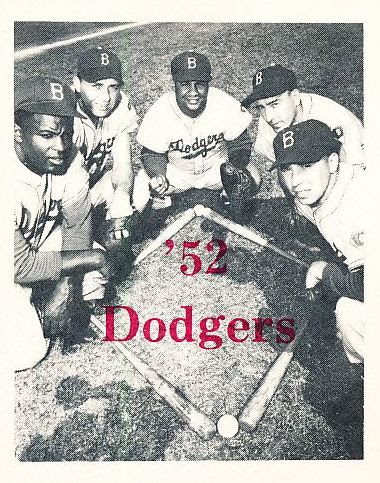
1974 TCMA "1952 Brooklyn Dodgers" Baseball #5, Sandy Amoros

Starting in 1972, TCMA found growing success with direct-to-collector sets built from their collection of vintage baseball photo negatives and sold via mail order. Some of their work covered classic teams like these Boys of Summer-era Dodgers and others reprinted scarce issues from our hobby's past. According to TCDB.com, they produced 26 different sets in 1974 alone!

Today's set includes a bunch of guys who suited up (and had their pictures taken) for Brooklyn's pennant-winning 1952 squad.


Crinkle-nosed rookie Sandy Amoros played 20 games in 1952 as a late-season addition, often pinch-hitting or taking over on defense. His last appearance that year came during Brooklyn's 5-5 tie on September 28th, something impossible in today's era.

TCDB calls this set "unnumbered" on its checklist, yet Sandy's uniform #5 makes this a type hit in my eyes. Sometimes collectability overcomes sensibility.


MLB history contains one more Edmundo (Sosa), but Sandy's its sole player named "Isasi" or "Amoros."

Look for two card ink variations, blue and black, with examples below. Little surprise that Jackie Robinson's cards rank most popular with people who know about this TCMA set.

This group shot of Brooklyn's 1952 infield (Jackie, Gil, Campy, Billy, and Pee Wee) grouped around bats and balls now includes four HOFers following the 2022 induction of Gil Hodges, with just third baseman Billy Cox on the outside looking in.

Value: My Sandy cost $1 from the oddball table at a local show, a price I'm happy to pay for hard-to-find hits. Jackie and other Dodger stars will run more.

Fakes / reprints: While color variations show that TCMA itself printed more than one run of cards, it's hard to imagine anyone else reprinting such an obscure set.

Wednesday, August 3, 2022

1979 Tony McLaughlin's Early Red Sox Favorites Baseball #5, John (Johnny) Gooch

It took me several years to track down today's oddball #5, thanks on one hand to its small-scale production and on the other to its niche appeal among Red Sox collectors and those who like "Tools of Ignorance" (catching equipment) on their cards.


Self-published in 1979 by Maine collector Tony McLaughlin, this 25-card set features some Red Sox players and locations otherwise tough to find on cardboard. In true 1970s oddball fashion, card size is a bit larger (2-5/8" by 3-3/4") and printed on thick card stock, making it a tight fit for 9-count pages.

Gooch himself appeared on a handful of cards during his career and some retro sets afterward. TCDB.com lacks this 1979 set listing as of 2022, so we can bump Johnny up to 10 known cards.


Early Red Sox Favorites cards carry a brief description, card number and circled TM logo on the reverse. While "favorite" seems a polite stretch for Gooch's single season and 37 games, its full checklist features confirmed Boston stars like Jimmy (Jimmie) Foxx, Lefty Grove, and Joe Cronin.
  1. New Fenway Park Just Being Completed
  2. Mrs. Tom Yawkey & Mrs. Eddie Collins
  3. Tom Oliver, Earl Webb, Jack Rothrock (Red Sox Outfielders, 1932)
  4. Red Sox Ace Pitchers (John Marcum, Wes Ferell, Lefty Grove, Fritz Ostermueller)
  5. John Gooch (Red Sox catcher, 1933)
  6. Red Sox recruits with Joe Cronin at Sarasota, Florida
  7. Danny MacFayden (1926-1932)
  8. Dale Alexander (1933)
  9. Robert (Fatsy) Fothergill (1933)
  10. Red Sox Sunday morning workout, Sarasota, Florida
  11. Jimmy Foxx signs ball for Mrs. Tom Yawkey
  12. Lefty Grove receiving key for new car, gift of Boston fans
  13. "Fireball" Lefty Grove (1934-1941)
  14. Jack Rothrock ... practicing base stealing with infielder Urbane Pickering
  15. Tom Daly, Al Schact & Herb Pennock (circa 1934)
  16. Heinie Manush & Eddie Collins
  17. Tris Speaker (1922)
  18. Home Run Star Jimmy Foxx (1936)
  19. Smead Jolley (1933)
  20. Hal Trosky, Cleveland Indians first baseman & James E. Foxx, Boston first baseman (1936)
  21. Harold "Muddy" Ruel, catcher & Wilcy "Fireman" Moore, pitcher (1931)
  22. Bob Quinn & Shano Collins (ca.1932)
  23. Tom Oliver, outfielder (1930-1933)
  24. Red Sox coaches Joe Cronin & Herb Pennock looking over pitcher Buetter
  25. Jimmy Foxx says "Nix" to chef at Sarasota, Florida 
Value: You can find scans and expensive singles ($6+) on COMC.com. This is a rare occasion where I recommend buying the whole thing for a low price (like this eBay listing) or hunting oddball boxes at shows. Most people interested in this Boston baseball era will want more than a single type card.

Fakes / reprints: While it's possible Tony himself reprinted the original set, I doubt reprints or fakes exist.

Saturday, November 23, 2019

Cross-post: What if Robert Laughlin made 300/400/500 today?

SABR's baseball card blog posted my second article for their site not long ago. Check it out!

300/400/500 update : Crime Dog McGriff

"What if Robert Laughlin made his 300/400/500 set today?"

And there's a non-zero chance I will indeed print an update to Laughlin's 300/400/500 in my lifetime. Just need the free time and digital art skills. ;-)

(And if you're interested in writing for them as well, I believe any interested SABR member can contribute articles -- visit SABR.org to learn more about membership.)

Sunday, August 6, 2017

2017 National Sports Collectors Convention recap

2017 set my new high water mark for hours on the National floor. Most years, I duck out for city sights at least one day, even at shows in Atlantic City. I skipped that tradition this year, as my "Chicago brother" moved west to Seattle earlier this year and I no longer have that connection to his Wrigley Field side of town. To keep a long story short, more hours on the National floor meant more cards came home with me!

Each National show occupies a full week, Monday to Sunday. Monday's "set up day" for most dealers, as they bring trucks and cases full of products onto the floor through massive loading docks. Dealers spend a lot of Tuesday deep in buy/sell/trade negotiations with each other and I'm sure the corporate sponsors like Topps and PSA do a bunch of face-to-face business. Wednesday afternoon's the first day open to the public and I flew in midday from Boston to start shopping and catch up with fellow OBC collectors. Early highlights included these $1 box finds.


National show floors comprise hundreds of tables and millions of things to throw money at. Single-minded collectors stick to their planned wantlists and budgets, despite temptations galore from all sports and eras. I am not that single-minded and wander within The Rules. I did OK this year.

The Rules (...are more what you call, 'guidelines')
  1. Buy more cards for yourself than to trade with other collectors - MOSTLY YES
  2. Take the show row-by-row and table-by-table - SORTA YES
  3. Don't yield to the haze of shiny baubles, buying stuff you don't want - MOSTLY YES

Number two's a problem because you need to stop for restrooms every now and then. (Heh heh, "number two" heh heh.) Despite my bladder's best wishes, there are not restrooms neatly placed at the end of every row.

Number three's a problem when you see tables with OMG is that a great deal prices on them. Those $1 cards were great deals, BUT not on my wantlists, violating number one. (They're all in the hands of other OBC collectors now, so friends did benefit.)

Show surprise #1: Cheap 1952 Topps


Not sure why, but you could find commons for under $5 at a bunch of tables. Over the past few years, eBay tilted closer to $7+ per card, so this was a pleasant surprise and enough reason to start a low-number 1952 set. I swung a pair of larger deals and bought 100+ cards for ~$3/card.

1952 Topps #5 black and red backs

Show surprise #2: Unreasonable 1930s prices

Banged up 1930s appear to have jumped from $8/card to $12-20/card when I wasn't looking. Would've come up well short of my National goals if I hadn't been willing to pay more. Landed about two dozen hits in that "new price range" during the week. Biggest hit, 1933 World Wide Gum #84 of backup catcher & occasional spy Moe Berg for $70.


Show surprise #3: I bought football cards

A football-only dealer sold me a near-set (20/24) of the 1933 Sport Kings Varsity Football game for $400, $20/card.


The card-flipping Varsity Football game remains hard to find at any show anywhere. Now I only need four cards to complete the game card set. Unfortunately, playing the game also required "score charts" I've never, ever seen. They'd bring to life the game situations described on card backs, probably by tracking down, distance, and time remaining. I'll make one up from scratch, if the authentic score chart search continues to prove futile.

Show surprise #4: Boy Scouts

As exception to my 1930s woes, I made five hits to this 1933 Goudey 48-card set about the Scouts themselves and a variety of nature topics. Love the art style.


Show goal success: stocked up on 1970s Laughlin sets in earnest, including World Series, Famous Feats, and Wildest Days & Plays. Robert Laughlin's standout art almost defines "oddball baseball" in its breadth of subject matter and card stock size. Happy to find his cards for 50c and $1 throughout the show. (See my past Laughlin posts for details.)

1970s Laughlin/Fleer Famous Feats & World Series cards

Show non-surprise: Price-grousing

If there's one enduring complaint I have about the National, it's that many dealers do most of their business buying & selling large lots with other National dealers, so grading and pricing for collectors becomes an afterthought. Other than Varsity Football, a $400 lot buy, my prewar sets saw limited action because things under EX had 30-50% NM book asking prices, even if tradition anchors poor ~5% and VG ~20%. I found myself back on eBay a few times during the show itself, buying cards on "real" condition pricing after seeing cloud-level show prices.


This poor-fair 1951 Topps Teams card proved an exception at $10. (I saw several other fair-good examples at the show for $30+.)

There's not a true solution to my complaint, other than being willing to shop online instead of the booths in front of you. I assume that's why sponsors bring so many autograph guests to the show: you can't replicate that in-person experience online the way you can for cards, so you don't lose those buyers to eBay.

Back to the bargain boxes

$1 box Laughlin World Series with Babe Ruth

$1 box 1971 Willie Mays

50c trimmed 1963 Topps with 2892 career HRs

Speaking of 50c/$1 finds like the three above, watch for a bargain box themed blog giveaway later this week! It's been too long since I held one. Anyone else make it to the National and have finds to share?

Tuesday, June 16, 2015

1963 Sport Hobbyist Famous Baseball Cards #5, Jack Barry

In the mid-60s, advanced collector and sometimes-dealer Frank Nagy published one of the first collecting magazines, Sport Hobbyist. It fit the mold of today's Old Cardboard and Net54 Baseball message boards, printing research articles, describing unusual finds, and connecting vintage collectors. Frank also printed several oddball sets and his "Famous Card Series" might be the first to specifically reprint existing baseball cards for collectors.


Most Sport Hobbyist cards depict players active before WWII, an era largely out-of-reach to modern set builders. The "Famous Cards" checklist goes a step further by replicating actual cards released many years earlier, including this 1916 Sporting News (a.k.a. M101-5) Jack Barry.

This Hobbyist type card shows Jack Barry's picture with no frame or text, possibly to avoid confusion with an authentic example from 1916. Most "Famous Cards" measure larger than the originals; compare this scan with Jack Barry as M101-5 #11.

I believe the Hobbyist printed 6 cards per year from 1963 to 1967, for a complete set of 30, and probably sent (or sold) them to subscribers. (A back scan of #7 from SCD's annual price guide is dated 1964, so the first "series" ends at #5 or #6.) Their full set also includes several E-series candy cards, a handful of the rarely-seen Tango Eggs, and the first known reprint of T206's Wagner.


Frank Nagy pulled double-duty on set backs by including both vintage set details and his Sport Hobbyist business address. He got card dimensions and set count right, but 1960s collectors probably didn't have a complete list of set variations; Old Cardboard's M101-4/5 checklist details those differences. (See also my profile of 1916 Sporting News #5, Leon Ames.)

Just for fun, I searched Google Maps for 12795 Wade St in Detroit, but didn't find anything more inspiring than a locksmith. Anyone out there know more about the Sport Hobbyist's fate?
Value: Vintage reprint sets vary in demand and price, but you might find singles for under $5 and the whole set for $100-150.

Fakes / reprints: It's already a low-value reprint, so I doubt anyone went to the further trouble of counterfeiting them.

Thursday, August 22, 2013

1962 Pittsburgh "Exhibits" Baseball 5 of Hearts, Ken Boyer & Harmon Killebrew

Some details of this oddball set remain a mystery outside of its Exhibits-like print style. It's 3"x5", blank-backed, and printed on thick stock, so not practical for actual hands of bridge. The 82-card checklist's officially tagged as "1962 Pittsburgh," with expert opinion placing distribution about there and then. (Keyman Collectibles keeps a checklist and more set info.)

Card front (blank back)

5 of Hearts isn't a proper #5 for my type set, but offers a fun excuse to mention excellent third-sacker Ken Boyer. One of the best offensive and defensive players of the late 50s and 60s, our guest's #14 deservedly hangs on the Busch Stadium wall. (#17 is none other than recent comparative Dizzy Dean.)

Over the years, I've heard a lot of dramatic Key Boyer stories from Midwestern friends. (A major highlight is Ken's take-the-lead grand slam against New York in 1964's World Series.) St. Louis residents remembered him in print as recently as June 21, 2009.


Hall of Famer Harmon Killebrew also shows up as five of hearts, one example of the set's multiple players per number and suit.

These Exhibits made me think of other "baseball playing card" designs from over the years. Here's a shotgun profile of the genre.
  • 1888 Base Ball Playing Cards, catalogued as WG1, the designation used for "game" sets. You can't use them for poker, but it's an interesting look nonetheless!
  • 1927 strip cards, catalogued as W560. Much smaller than modern clubs and spades, so more decorative than playful.
  • 1951 Topps Red Backs (and companion Blue Backs) contained 52 cards and a built-in baseball game.
  • 1962 Exhibit of Dem Bums, a rare issue with size and style reminiscent of today's Boyer card.
  • Baseball Heroes cards, the modern, "build to suit" version of putting team stars into play.

Those barely scratch the surface, as you could build a sizeable collection just from playing card sets or playable ones like 1968 Topps Game.

Value: Boyer cost me $10 a few years ago. eBay sellers of other Pittsburgh Exhibits ask from $20-50, depending on the player.

Fakes / reprints: Some Exhibits releases stretched across decades (40s-60s) and went through reprints in the 1980s. It's not clear if this 1962 issue did the same, but it's possible.

Thursday, August 25, 2011

Sports Cards for Insane People, Nolan Ryan Edition

SB Nation editor and professional suit-wearer Jon Bois runs a regular series of columns titled Sports Cards for Insane People that peeks into baseball's cardboard excesses of the 1980s and 90s. His most recent investigation plumbed the depths of Nolan Ryan oddballs and their casting call of plain blue hats, which featured two #5s.

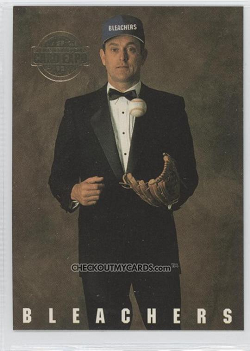
1991-92 Bleachers Promos #5

Look closely and cringe: card editors added "BLEACHERS" to Ryan's hat with cheap digital tools, just before they blew money on 23K gold foil. Must've been a crazy post-production session.

Bleachers specialized in minor league cards, player-specific sets, and stamping gold foil on things. Lest they seem feckless and reckless, dozens of early 90s card makers competed in those same events. Don't know if any of them "won," but we lost.

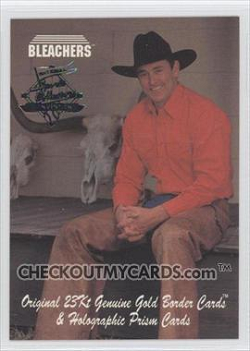
1993 Bleachers Promos #5

Jon proposes this is the first time any card featured a real skull. I also wondered: is Nolan the first to wear riding chaps in what's nominally a baseball set? Check out his article for maximal insanity.
Tuesday, August 9, 2011

Caribbean flavor at the 2011 National in Chicago

This is my second post on cards and experiences from the 2011 National in Chicago. Yesterday, I showed a smattering of cards from different eras; today, the focus is a trio of previously-unknown-to-me sets from the Caribbean winter leagues. I'm a fan of vintage cards from Central and South American countries, given their unusual look and those leagues' key role in breaking open MLB rosters for foreign-born players during the 40s and 50s.

Venezuela's close connection with 1960s Topps makes them the best-known offshore sets within our hobby, but pros in Cuba, the Dominican Republic, Puerto Rico, and Mexico also got cards. MLB signed a 1947 contract with Cuba's pro league to develop players during winter months, which led to this type card I plucked from a dealer's vintage box.

1949-50 Acebo Tobacco, Ben Wade ($12)

Brooklyn Dodger pitcher Ben Wade donned a Tigres del Mariana uniform for this 1949-50 Acebo tobacco set, whose checklist includes several names familiar to vintage fans. (I've enlarged his scan a bit for detail; the card's 1.5" square in real life.)

Only a couple of National dealers specialized in Caribbean or South American cards, but I saw singles from those 1960s Topps-licensed Venezuelans at several booths. What I didn't expect were two Dominican League cards that rarely turn up anywhere in any condition.

1960s Puerto Rican or Dominican League, Amado Samuel ($5)

Amado "Sammy" Samuel, who has a nice profile over at SABR's biography project, broke ground as the first regular Dominican-born MLB shortstop and currently stymies my powers of set identification. Amado played winter ball regularly prior to his 1967 retirement, making this either Puerto Rican or Dominican. The cap logo looks like QC or GC, but I can't find an easy match for that team and era in either country's pro league. Looks like I'll need help from real Caribbean card experts.

1960s Dominican League, Chilote Llenas ($5)

While still obscure, this one's a little easier to pin down. Chilote (a.k.a., Winston) Llenas starred for Águilas Cibaeñas in the late 1960s and might be wearing the same uniform he donated to Cooperstown's Viva Baseball exhibit, so this is definitely Dominican. Winston also played several MLB seasons and Night Owl profiled his 1975 Topps card just a few weeks ago

Those three cards represent the obscure stuff, but there's more to come. I get excited when oddballs appear in a low-grade box or mixed lot because it means a learning opportunity. As a kid back in the 1970s, cards taught me a lot about reading and numbers. These days, it's more about history and business, both things that sports seems inextricably connected to...

If you're new to South American cards, see these Venezuelan set profiles for scans and more info.

Monday, May 31, 2010

Memorial Day Flashback: Wartime baseball cards

Today, we remember American veterans of the world's many conflicts, a day that also has close ties to multiple generations of baseballers. Back in August 2008, the #5 blog profiled a 1975 TCMA set of major league players stationed or traveling in Guam. It featured a lot of vintage names, several unique photos, and an essay (on card backs) that talked about the tour in detail.

Card front

Find details on the set, more on players in the photo above, and a full set of front and back scans at 1975 TCMA Guam #5!

Friday, November 20, 2009

1977 Fritsch One-Year Winners #5, Bob Thorpe

Many 1970s oddball sets seem like a Google Image Search for "old baseball photos." The sheer quantity of player images out there, even for obscurities like Robert Joseph Thorpe, would fill out a ton of issues, if actually organized and printed.


Card front

Collector and businessman Larry Fritsch pulled together a bunch of otherwise hard-to-find fellows as One-Year Winners. 1977 was the first of 3 "OYW" series and its 18 card checklist includes Eddie Gaedel and Chuck "The Rifleman" Connors.

Many OYW stories could also be called "one-game wonders," such as pitchers who made a single impressive appearance or batters who went 3-for-3 and never played again. Bob Thorpe didn't blow anyone away for the Cubs, but he did go 69-44 in the minors.


Card back

Against all odds, there's at least one autographed OYW card out there. Mr. Fritsch still offers complete series on his web site and individual cards on eBay, where #5 (and other "commons") cost $2 or $3.

Wednesday, November 18, 2009

1976 ISCA Hoosier Hot-Stove All-Stars #5, Amos Rusie

Today' guest made a home state debut in 1889, winning 12 games for the Indianapolis Hoosiers as a fresh-faced 17 year-old. He started 22 games and finished 11 as a reliever, hurling 225 innings total and striking out 109 batters. That's a full season by today's pitching standards, but barely hinted at Amos' next decade as a moundsman, when he'd average over 400 innings and total 245 victories.


Card front

The Indiana Sports Collectors Association published this bicentennial-themed 26-card set in 1976 to honor local players and teams who contributed to baseball's considerable history. The checklist contains plenty of name-worthy guys; Don Larsen and Gil Hodges are 2 of the non-HOFers. I assume sets went out to ISCA members, making them hard to come by today.


Card back

Two things stand out on Rusie's card, "strong candidate for [the] Hall of Fame" and "brief 10 year career." Indeed, the Veterans Committee voted Amos onto a plaque for 1977, validating the ISCA's editorial acumen. Fellow Hoosier (and card #14) Hodges nearly joined him the same year by receiving 58% of the BBWWAA vote.

So is it better to burn out than to fade away? Like previous #5 guest Dizzy Dean, Rusie's career included a block of dominant performance followed by a quick fade. 3 appearances for Cincinnati in 1901 count as a "season," which snuck him past the HOF's 10-year career minimum. It's not clear if anyone remained alive to lobby on Amos's behalf--as former Gashouse Gang members benefited from Frankie Frisch--so his selection's probably deserving, if plucked from a different epoch.

Thursday, October 22, 2009

1980 TCMA 1950 Whiz Kids #5, Curt Simmons

Congratulations to the Philadelphia Phillies, as they return to defend their 2008 World Series trophy. With over a century of franchise history and only a pair of titles to show for it, the chance to go back-to-back seems like spitting against a stiff October wind. Fortunately, they continue to improve year-to-year and look more than ready to face either the Yankees or L.A.'s younger brother.

2009 marks only the 2nd time Philly reached the playoffs 3 consecutive seasons, matching a run from 1976 to 1978. In the 60 years prior to America's bicentennial, only 1 of their teams made the post-season at all: 1950's "Whiz Kids." In 1980, TCMA recalled this high-energy squad in a 31-card set; #5 pictures 17-game winner Curt Simmons. (And hey, The Phillies Room blogged this set just last month!)

Card front

Card back

The 1950 and 2009 teams both stand out for their average age, but at opposite ends of the spectrum. Future Hall-of-Famers Richie Ashburn and Robin Roberts, both only 23, headed 1950's collection of "kids." Only 1 position regular had reached 30 and closer Jim Konstanty was the pitching staff's "old man" at 33. This year, guys like Jamie Moyer (46), Pedro Martinez (37), and Chan Ho Park (36) make new acquisition Cliff Lee (30) below Philly's average age.

1950's lineup hit for an OPS+ of 102 and pitched a lights-out ERA+ of 116. With a competent lineup and superior pitching, which outcome's most surprising?

  • The Yankees swept their series in 4 games
  • Philly sank back to last place by 1958
  • The photographer took midday pictures without shadowed faces

Should Philly face the Yankees, it'll be their first post-season meeting since that 1950 series and you can expect a few callbacks to the Whiz Kids. Hat tip to Baseball-Reference.com for the gents from that roster who are still with us.

Friday, October 16, 2009

1976 Laughlin Diamond Jubilee #5, Frank Robinson

I think Frank Robinson loves baseball more than Cheez-Its love orange food coloring. Already one of the all-time best players, he took over as player-manager for Cleveland in 1975, helmed four different franchises prior to retirement in 2006, and continued to work as an MLB executive. If any man deserves a special subset of career highlights, it's Frank.

Today's card highlights Robinson's debut as Cleveland's manager on April 8, 1975. Slotting himself at DH, Frank homered off Doc Medich in the first inning, a game Cleveland won 5-3 over the Yankees. (Gaylord Perry pitched the complete game win; he and older brother Jim Perry both started the year as Indians, but departed by mid-season trades to Texas and Oakland, respectively.)

Card front

This oddball set's another self-published effort by baseball artist Bob Laughlin. It celebrated the 75th American League and 100th National League Anniversaries with a 32-card profile of significant moments in each team's history. (The set includes two 1975 achievements, Frank's debut and Nolan Ryan's fourth no-hitter.) Player poses come from familiar photos, re-drawn and cast into primary colors reminiscent of the 1948 Leaf sets.

Card back

Value: I've seen this set on oddball tables for ~$80 at shows. It includes lots of Hall-of-Fame players and individual cards run $1 to $10.

Fakes / reprints: Haven't seen any fakes in the marketplace and it seems unlikely, given the set's low profile.