Tuesday, August 31, 2010

1976-1977 HRT/RES 1947 Bowman Baseball #5, Andy Pakfo

Many collectors know slugger Andy Pafko for his Topps position of honor as their first 1952 card. While disregarded (and "undervalued") as a significant position into the 1980s, Upper Deck's use of Ken Griffey, Jr. to kick off their 1989 set also raised the profiles of vintage #1s, including Pafko. These days, even low-grade versions go for more than $100.

Card front

Andy's 1952 card also garnered a cameo in Kevin Smith's 2010 movie, Cop Out. Bruce Willis tries to sell his father's mint-condition Pafko to finance a wedding, which says something about both vintage card values and the cost of 21st century matrimony. (This also reminded me of Pulp Fiction, where Willis's need to recover his father's watch becomes its MacGuffin.)

Card back

Philly Show promoters Ted Taylor (HRT) and Bob Schmierer (RES) created this "prequel" to 1948 Bowman baseball as a sibling to their 1942 Play Ball issue, already profiled in April 2010. Its 113 cards came out in 3 series and included both active players (like Pafko) and HOFers (like Ruth and Gehrig).

  • Series 1: #1 - 49 (1976)
  • Series 2: #50 - 81 (1977)
  • Series 2: #82 - 113 (1977)

Wisconsin native Pafko played most of his lengthy career close to home, starting with 9 years in Chicago and closing with 7 in Milwaukee, including their 1957 World Series win. I'd never heard "Baby Bruins" as a nickname for the Cubbies before, but won't soon forget it.

UPDATE: Thanks to blog Vintage Sportscards, I learned that HRT/RES cropped their photo from this Andy Pafko Exhibit card.


Value: I bought this card on Beckett Marketplace for $3, about right for a mid-70s oddball set.

Fakes / reprints: This is already an homage to vintage Bowman cards, if not exactly a reprint, and I doubt anyone would print another run of them.

Monday, August 30, 2010

Bill James, Paul Richards, and 1951 Bowman

Last week, blogger cubbiedude profiled Bill James's 1997 book about baseball managers. He pulled a lot of good quotes from its pages, including this comparison of 1950s ChiSox helmsmen Paul Richards and Al Lopez.
“Both Richards and Lopez were ‘defense first’ managers. Lopez once said that all a team really needed was pitching and defense, because if you didn’t allow the other team to score, eventually they would give you a run, and you’d win the game. Richards was less extreme in this regard.”
1951 Bowman #153
 
Al's teams captured 2 pennants, another area where Richards proved "less extreme" by winning none. He leads, however, in the all-important Bowman caricatures category. 1951's a favorite set of mine and Paul's card stands out. What says "field manager" like a parade balloon-sized cranium and 5-story neck?

Friday, August 27, 2010

1976 Motorola Baseball #5, Three Finger Brown (aka Mordecai Brown)

Baseball writers are burning a lot of oil today on Stephen Strasburg and his pending Tommy John elbow surgery. Since pitching and injury risk go hand-in-glove, let's look back to a player who turned his own ill fortune into a HOF career.

Card front

Mordecai Brown suffered at least one (and perhaps two) injuries as a young man, leaving him with about 1/3 of his first finger and poorly set broken bones in his second (pictures at his Wikipedia entry). It appears the "reshaped" hand gave his pitches unique torque, which he developed into one of baseball's best curves.

Card back

This 11-card set  includes several big names, including Ruth and Cobb. Brown's card back only includes redemption info, with no career stats or player info. Notice how the paper-thin stock allows you to see type through both sides.

Here's the set list of players, all HOFers or known for special achievements.
  • Grover Cleveland Alexander
  • Three Finger Brown (Pretty sure "Fingers" should be singular)
  • France Chance
  • Ty Cobb
  • Frankie Frisch
  • Pud Galvin
  • Nap Lajoie
  • Babe Ruth
  • Ray Schalk
  • Honus Wagner
  • Bill Wambsganss (only unassisted triple play in a World Series)

Value: As an obscure set of big names, prices vary quite a bit. I got this #5 for $10 from eBay, probably cheap since Brown was a redemption card for a set of Motorola data books. (See the back description.)

Fakes / reprints: They would be tricky to fake and probably hard to sell, but be aware that Motorola cards come on paper-thin stock and have a glossy finish.

Thursday, August 26, 2010

1976 Shakey's Baseball Immortals #5, Honus Wagner

Seattle pizza chain Shakey's produced this set over a 3-year period, 1976 to 1978. It included every current HOFer, numbered by order of induction, so Wagner got #5 as a member of Cooperstown's 1st class.

Card front

I lived in Seattle for 20 years and ate at Shakey's many times as a youngster. This set stirred memories of overheated pepperoni and steak fries, two staple ingredients from their all-you-can-eat pizza bar. *BURP*


Card back

This card back packed in a lot of info and still left space for a corporate logo. Note Wagner's spirited nickname, "The Flying Dutchman," a moniker that plays off the ghost ship (a legend better-known in his time) to salute his base-running skills.

According to Baseball-Reference.com, Honus's career stats differ from this 1976 version in every listed category. He somehow "lost" 10 hits, perhaps from better research into Wagner's 19th-century career with the Louisville Colonels. At least they got those cradle and grave dates right!

Value: Oddball set or not, Wagner commands higher prices than most old-school players. This card cost $8 on eBay, which feels a little high, but not unconscionable.

Fakes / reprints: I doubt that fakes of such a low-profile set would be worth printing.

Monday, August 23, 2010

1980 Cramer Phoenix Giants Baseball #5, Larry Prewitt

Phoenix's own PCL franchise played as the Giants from 1958 to 1985. The latter date's about when MLB Properties started enforcing licensing fees for its trademarked team names and logos, probably triggering a switch to "Phoenix Firebirds" until their demise in 1997. Given the bland, yellow hue of today's card, how about "Saltines" or "Nilla Wafers"...?

Card front

Cramer Sportcards produced full-color sets for other teams earlier in the 1970s, so Phoenix likely used this 2-color design to save money. They did offer an additional premium (the team picture), but made young collectors mail away 5 card tabs and 75 cents for it.

Card back

Check out this History of Phoenix Minor League Baseball 1958-1980, which mixes player profiles, year-to-year stadium pricing, and local history into an epic of "Page Down" proportions.

Larry Prewitt shows up near the bottom of that history page and his balloon-like 9+ ERA and 2+ WHIP reflected the Giants' own tough 1980 season. How bad did things get?
"At the end of the miserable season, the Giants were short of players so they activated first baseman Gerry Jestadt...official scorer for home games and a radio color commentator. In addition, a Phoenix television sports director, Bill Denney, started the final game of the year. Denney, who was 48 years old, had pitched as a pro from 1950-58, but never higher than AA."
No wonder minor league scorekeeping can be a nightmare to sort out. The guy in charge of official records might be on the field himself!

Check out a full 1980 team profile (with card scans) at A Giant Blog!

Value: $2 netted this creamy vanilla card from MinorLeagueSingles.com.

Fakes / reprints: Haven't seen any fakes from this set and pity the fool who'd try to sell them!

Sunday, August 22, 2010

Topps baseball cards and Sweet Lou Piniella

Lou Piniella will step down as Chicago Cubs manager after Sunday's game, August 22, 2010. In honor of his almost 50-year playing and managing career for numerous franchises (including my Seattle Mariners), I wanted to look back at his earliest cards, before Lou became "Sweet."

1964 Topps #167

Topps debuted Piniella as a 20 year-old Washington Senator Rookie Star with Mike Brumley, after they selected Lou in their 1st year draft. (They made a "city swap" with Minnesota that year, so Washington was technically the expansion team.) He appeared in 4 games, had 1 at-bat, and returned to the minors for 4 years.

1968 Topps #16

This second Rookie Stars card was a homecoming of sorts, as Cleveland originally signed 18 year-old Lou in 1962. They reacquired him in a 1966 trade and he played in a half-dozen 1968 games.

1969 Topps #394

The Pilots drafted Lou away from the Indians in late 1968, but shipped him to Kansas City on April 1, 1969, becoming the first of Seattle's many regrettable trades. Here's a clip of what SportsEcyclopedia.com had to say.

"Spring Training 1969: In a sign that the Pilots were doomed for failure Lou Piniella a 26-year-old rookie is traded at the end of spring training. Piniella was sent down a few weeks earlier despite having strong numbers in spring games. The problem was that Pilots manager Joe Schultz did not like Piniella, who was set to make $175, 000. The Pilots did not want to pay him so they got rid of him. Piniella would end up with the American League's other 1969 expansion team the Kansas City Royals, and he would win that year's Rookie of the Year."

It's unusual for players to appear on three different Topps multi-player cards, but not unique. 1960s prospect Bill Davis shared space on a card FIVE TIMES, one per year from 1965 to 1969. Check out more details (and scans) at "Hope Springs Eternal" from the blog 1207 Consecutive Games.

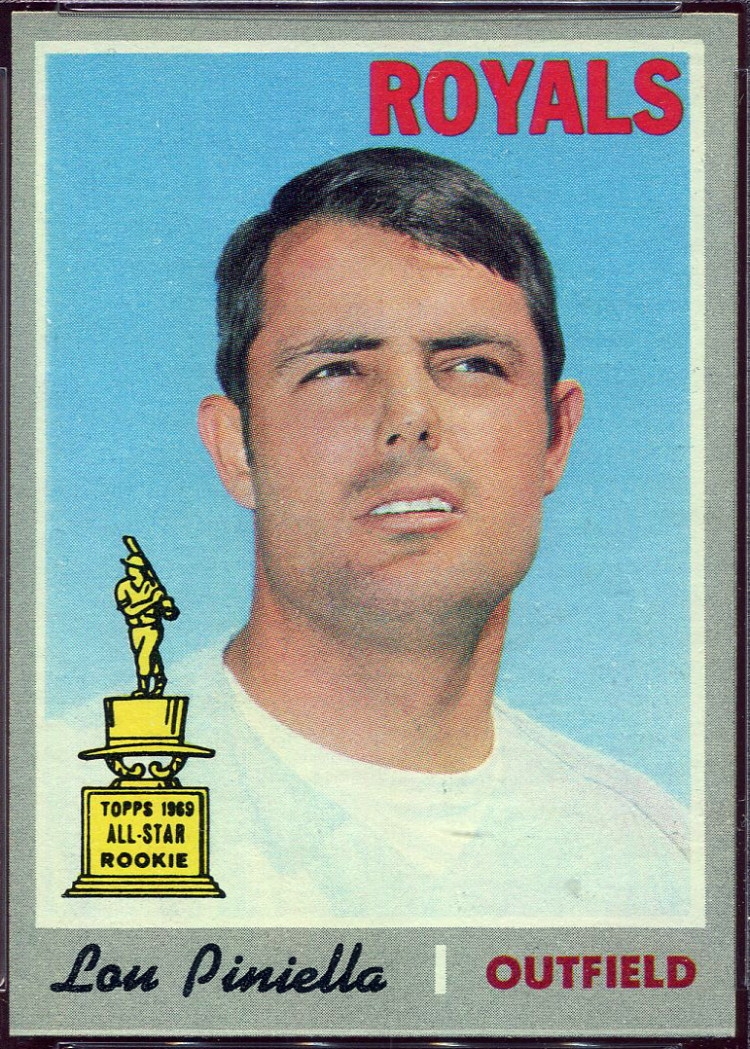
1970 Topps #321

Love those oversized rookie trophies! While Topps gave them to one player for each position, Piniella also took home the real one. (At the time, it was the Comiskey Memorial Award, since renamed to honor its first winner, Jackie Robinson.)

Compare Lou's hairstyle to the 1970 Topps Super set below. These photos came at least a year apart and probably more; "Super" Lou looks a lot younger and much more tan. A spring training shot from Florida, perhaps?

1970 Topps Super #32

Not many gents accomplished what Lou did, as player and (especially) manager. Here's hoping he can relax equally well and hey--happy 67th birthday next weekend!

Thursday, August 19, 2010

Poll: What day and time do you post?

While researching the history of Rochester's Red Wings for their 1980 TCMA set, "post timing" ran through my head several times. I wondered, is there a best time to hit your Publish button? Does going live at 9am Monday or 9pm Friday make a difference in visitor count? Almost everyone following this blog lives in North America, with similar daylight hours. Are they reading by sunshine or candle light?

To learn more about analytics from my betters, I read through When is the Best Time and Day to Post on Your Blog? from a writer of significantly greater audience.

Most important quote from that story: "The key continues to be have your content waiting when your readers arrive." (Emphasis by the author.)

Sounds like what newspapers have been doing for centuries, right?

I personalized this by dividing the Google Analytics visitor count into 3 phases. Morning (4am - noon), afternoon (noon - 8pm), and night (8pm - 4am).

Click to embiggen the report

Week-to-week, afternoon's green stripe edged out morning's orange for "total visits," with night's yellow tail lagging well behind. This is without scheduling any posts (i.e., "East Coast, 8am"), so is likely skewed by my random writing times.

So, this week's question: do you schedule posts for specific days or times? If so, what do you shoot for?

Wednesday, August 18, 2010

1980 TCMA Rochester Red Wings Baseball #5, Mark Corey

Rochester, NY hosts the "longest-running minor league franchise in the history of professional sports," currently as AAA affiliate for the Minnesota Twins. Prior to 2003, they farmed for Baltimore for 40 years (including 1980), and St. Louis for another 40 before that, but the organization's history stretches all the way back to 1899. Zounds.


Baseball Digest profiled the Red Wings and their 20 league titles in May 2010. One thing I did not know: they've retired uniform (and very unlikely player number) #8222. St. Louis put the franchise and stadium up for sale in 1956, seeking to leave town. In less than 3 months, 8,222 residents banded together and bought shares in the team itself, Green Bay Packer style. Thanks to that surge of support, baseball stayed (and remains) in local hands. Fans called it the "72 Day Miracle" and made that number a hallowed one in Rochester.


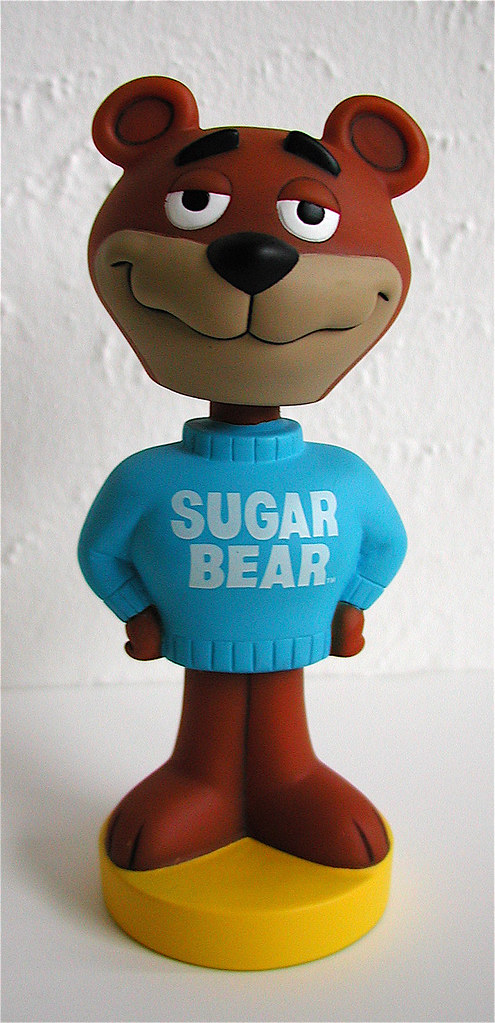
Also on the 1980 squad was Floyd "Sugar Bear" Rayford, now Rochester's hitting coach. That's a great nickname for any big-boned ballplayer, but was it actually "sugar," as noted on the coach profile page? Folks around the Internet remember "Honey Bear" and even "Huggy Bear," from the 1970s TV show "Starsky & Hutch." (That last one seems like a reach.)

Travis Lau of The Evening Sun sought out Mr. Bear a few years ago to find out for sure. Check the end of this forum for his article, which confirmed "Sugar Bear" as Floyd's nickname.


Value: Mr. Corey cost $2 on Beckett Marketplace, similar to my other 1980 TCMA singles.

Fakes / reprints: If Cal Ripken had been in this set, it'd be a real concern. Fortunately, he didn't make Rochester until 1981.

Tuesday, August 17, 2010

1980 TCMA Ogden A's Baseball #5, Randy Green

This blog recently profiled two San Jose Missions players, Ed Crosby (1978) and Mark Chelette (1980). While both played under Seattle's umbrella, the local ownership changed completely between those seasons. (This happens a lot in the minors, as local attendance waxes and wanes.)

Ogden bought out San Jose's Pacific Coast League affiliation prior to 1979's opening day and signed a AAA agreement with Oakland, which dropped Vancouver, BC, after 1978. San Jose then added a new single-A team, which joined the Seattle system, an arrangement that lasted through 1980. Today's Ogden A's also survived only 2 years before folding, but had the distinction of fielding Rickey Henderson for 71 games prior to his big-league debut.

Card front

What about that warmup jacket, huh? Ogden really grabbed their red-on-white look and ran with it, something that echoes in the 1980 TCMA card borders. I'm not crazy about the color combo; this is one time when some Oakland yellow-and-gold would've livened things up for the better.

Card back

Wow, that's a really empty card back. For the official record, Randy went 3-7 for AA Waterbury and 5-7 for AAA Ogden in 1979, both teams in the Oakland farm system (career stats at Baseball-Reference.com). He stuck around the minors for 5 years, but never got a call to the bigs.

Value: Randy cost $2 on Beckett Marketplace, about right for 1980s minor leaguers.

Fakes / reprints: Haven't seen anyone fake one of these red-bordered TCMA cards.

Monday, August 16, 2010

1980 Jack in the Box San Jose Missions Baseball #5, Mark Chelette (aka Chellette)

Just for blog reader Mariner1, here's another #5 Seattle minor leaguer. Those expansion-era uniforms really jump off the card!

Card front

Seattle drafted Mr. Chelette (one el, error by the team or card maker) in 1979's 30th round (full record at Baseball-Reference.com), the same year they chose eventual big-league successes Bud Black and Tom Henke. Unfortunately, Mark never reached higher than single-A, so appeared on only 2 baseball cards, this San Jose example in 1980 and Wausau in 1981.

It almost goes with saying that Bud Black and Tom Henke succeeded with teams other than Seattle. Black won a World Series ring with KC (1985) and Henke picked one up as a Blue Jay (1992).

Card back

By 1981, Chelette must've seen the end of his playing days coming. Nominally a player, he attended the Midwest League All-Star game as an assistant for team manager Bill Plummer. After 13 more games at Bakersfield in 1982 (and only 10 in the field), I assume Mark moved to the bench full-time or retired to other pursuits.

It was tough to find info on Mr. Chelette at first, as some stats track his first name (John, as at B-R.com) and others his "playing" name (Mark). The vagaries of pre-Internet minor league record-keeping can make for challenging research!

Value: Got this on MinorLeagueSingles.com for about $2, about right for 1980s players.

Fake / reprints: You can't fake a smile like Mr. Chellette's and neither have I seen any reprints in the market.